Dear colleague,
In The Will to Learn, I introduced a strategy called Tracking Attempted Moments of Genuine Connection (MGCs). I've covered MGCs extensively elsewhere on the blog (the most comprehensive treatment can be found here), so today I won't repeat that work. Instead, I'd like to share with you some practical things I've noticed this year as I begin to use the strategy with my students.
- First of all, the initial task of a solid MGC game is building working mental models of each of your students. This model-building work — which starts with simply attaching names to faces and grows from there — is, to me, one of the primary sources of both exhaustion and pleasure during the first couple weeks of school. It's something I have to both work and play at.
- The way I track MGCs, even at the start of the year, is very simple. I'm going to include a shot of what my clipboard looks like right now just to prove what I'm saying. When I help schools launch MGC efforts through in-person workshops or keynotes, one of the most common obstacles they face is teachers making their MGC-tracking overly complicated. The more complex the system, the more likely it is to break down. For me, it must be kept simple.
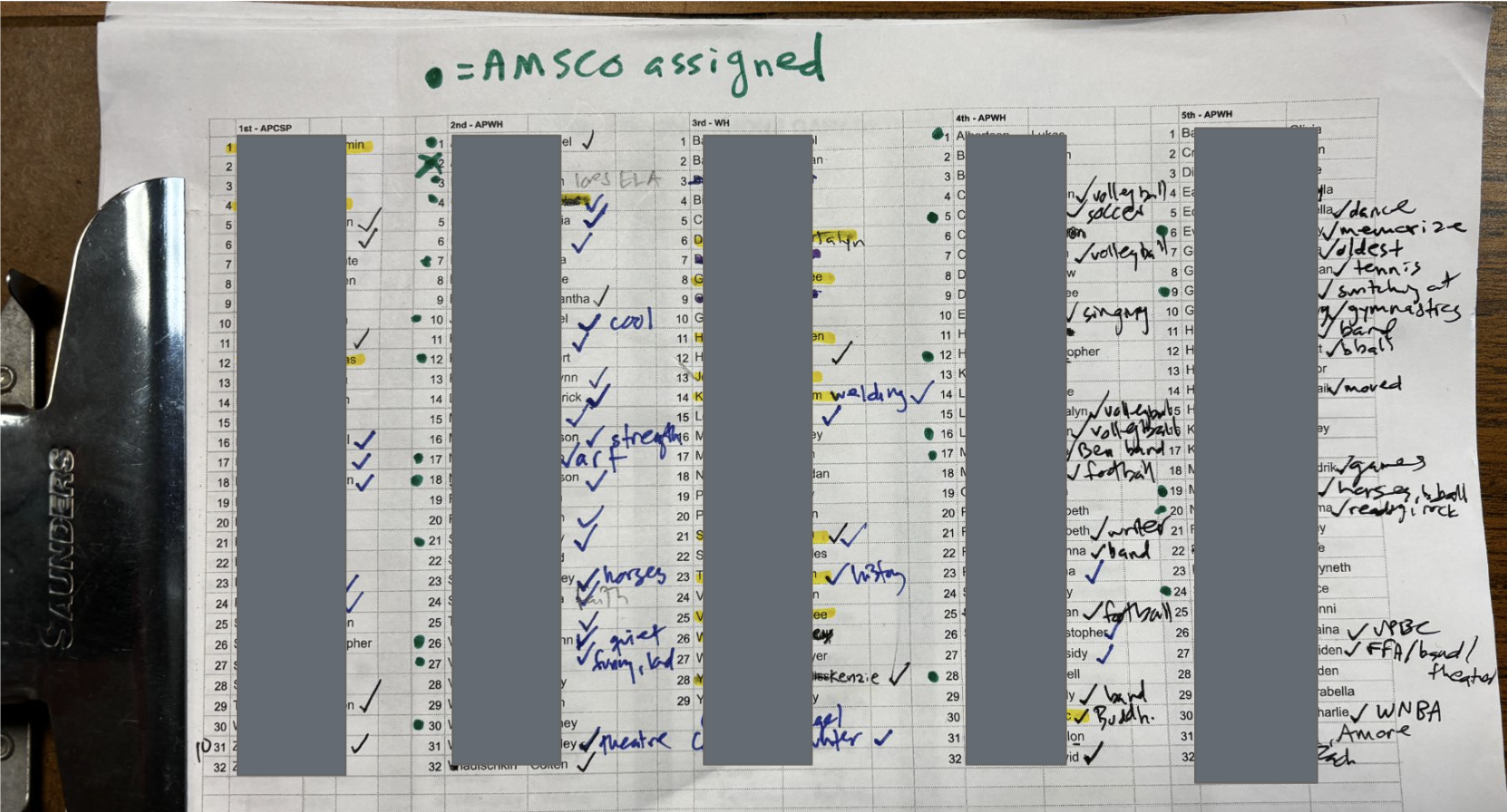
- MGCs are both work and play, labor and love, authentic and routine. Sometimes folks complain that tracking attempted MGCs takes the magic out of building connections with students. But to me, tracking attempted MGCs just means I'm making regular, systematic room for lots of magic to take place.
- The point is the attempt, not the outcome. I spend exactly zero seconds wondering whether or not a given MGC “worked.” The fact is, MGCs will work when conducted often enough, so long as I make sure I'm working hard to genuinely value, know, and respect each of my students. And, make no mistake: it takes hard inner work for me to like some of my students in this way. But the work is worth it. So long as you're doing this, you don't need to worry about whether or not a student “felt” how you feel about them. Just keep at it; they're smart and receptive, and the signal will get through eventually.
- MGCs, like all 10 of the Will to Learn strategies, do lots of things simultaneously. They:
- Cultivate Credibility by signaling that I care enough to take a moment to chat with them
- Cultivate Belonging by creating a space in which students are being shown that they are valued, known, and respected
- Form a relational base with my students from which I can build more difficult teaching efforts such as Woodenization (Strategy #7 in The Will to Learn), Valued Within exercises (Strategy #6), or Unpacking Outcomes, Good or Bad (Strategy #9).
So, these are some things I'm finding important as I go about the annual tradition of starting out my MGCs. I'd love to hear what you're learning in the comments.
Teaching right beside you,
DSJR
P.S. Today I'm stepping away from the classroom for a minute to speak with secondary educators in Traverse City, MI. This is my second visit to the school system, and our focus is (you guessed it) tracking attempted MGCs.
Leave a Reply